River chapter
A river made of crystal
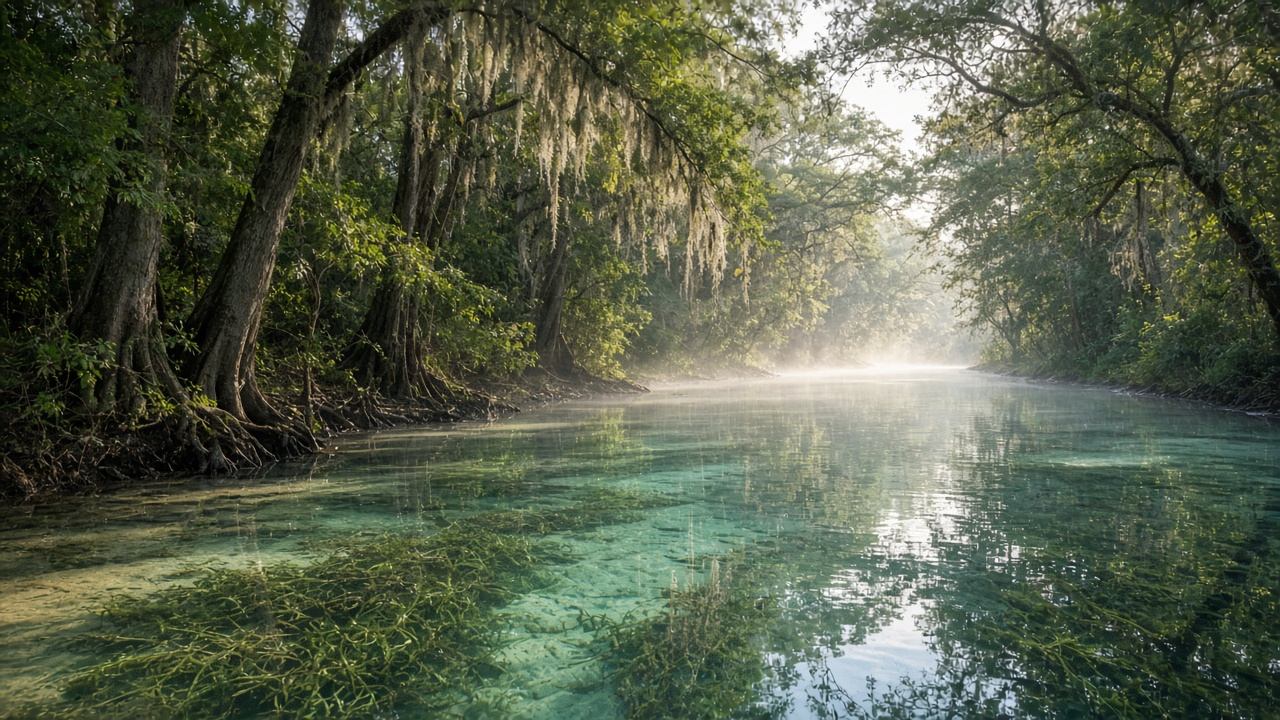
Follow the water through the forest at Ichetucknee Springs State Park, where a spring-fed run keeps limestone white sand and aquatic plants visible from the surface.
Ichetucknee Springs State Park protects one of the most photographed spring runs in Florida. Groundwater rises through the limestone aquifer, emerges at several vents, and gathers into a river so clear that kayakers can read the current by watching eelgrass and bladderwort sway beneath the hull. The run flows roughly six miles through a corridor of hardwoods and bald cypress before joining the Santa Fe River. That length makes Ichetucknee a destination for slow paddling rather than a quick swim-and-leave stop.
Spanish moss drapes the branches overhead, filtering sunlight into green-gold patches on the water. Turtles bask on submerged logs, and herons pick along the banks when traffic is light. The visual effect is what travelers mean when they call Florida springs “liquid glass”: color comes from depth and sky reflection, not from sediment. A spring boil at the heads can look like a churning mirror when discharge is strong.
Kayaking the crystal corridor
Most visitors experience the river by kayak, canoe, or permitted tubing during designated seasons. Launch logistics split between the north and south ends of the park; klimtut recommends arriving early on weekends because parking and shuttle windows fill quickly. The current is gentle but steady, so upstream paddles against it are inefficient. Plan a one-way float with a park shuttle or a staged vehicle when rules allow.
Underwater plants are part of the scenery and part of the ecosystem. They oxygenate the water and shelter small fish. Stay on marked channels and avoid trampling vegetation when entering or exiting. Pair your paddle plan with the clear-river paddling notes for distance, launch points, and seasonal limits.
Forest edge and limestone
Trails and pull-outs let you study the meeting zone between spring run and forest without boarding a boat. Boardwalks and shaded paths reveal cypress knees, ferns, and the pale limestone shelf that shapes the channel. That intersection is the same theme developed in cypress forests: roots in the water, canopy above, and a constant seventy-degree chill from spring flow even on hot summer afternoons.
Rules change with water level, wildlife concerns, and visitation caps. Tubing seasons, private vessel limits, and swimming zones are posted at the park and summarized in the Florida springs guide. Treat every visit as conditional on the day’s alert board rather than on last year’s trip report.
Slot Ichetucknee into a longer north Florida itinerary on the five-day spring route, where it anchors a central day between Rainbow Springs and Gilchrist Blue. Driving between parks is part of the real experience; the river itself is not a through-paddle link to Silver Springs or Blue Spring.
What you see beneath the surface
Eelgrass beds
Ribbon-like plants trace the current and clarify how the channel narrows around bends.
White sand trail
Clean quartz sand marks the deepest runnable groove; ideal for reading safe draft.
Limestone ledges
Shelf edges drop into jade pockets where fish hold in midday shade.
Follow the water through the forest
Leave room in your schedule for a quiet hour at the heads, when morning light makes the boil visible and the river still feels private.
Plan your paddleSpring notes by email
Seasonal alerts and route ideas from klimtut, no spam.